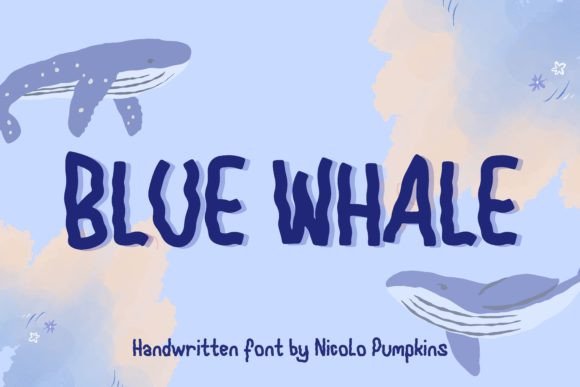
Blue Whale Font for Web Design
It was a quiet afternoon when I first tested Blue Whale on my client’s boutique website. The goal? To give the brand a warm, approachable feel without sacrificing professionalism. As I dropped the font into the hero section, something clicked. The wavy, handwritten style of Blue Whale felt like a breath of fresh air, instantly transforming the page from generic to inviting.
Blue Whale is a wavy, cute, and friendly handwritten font that brings personality to any digital project. Its soft curves and playful character make it perfect for websites that want to convey creativity, charm, or a personal touch. Whether you're designing a creative portfolio, an online store, or a course landing page, this font adds a layer of warmth that's hard to achieve with standard typefaces.
First Impressions in Digital Layouts
The moment I saw Blue Whale on screen, I knew it had potential. It's not just about how it looks—it's about how it behaves in different contexts. Testing it on mobile screens showed that its legibility held up surprisingly well, even at smaller sizes. When placed over image banners, the font didn’t lose its charm; instead, it added visual interest without overwhelming the content.
I used it in the hero section of a boutique online store, and the results were immediate. The font softened the look of the site, making it more welcoming for customers. It worked especially well paired with a clean sans serif font for body copy, creating a balanced contrast between decorative and functional typography.
Where Blue Whale Shines Online
Blue Whale excels in short, impactful phrases—perfect for headlines, call-to-action buttons, or logo text. I tested it on a coaching website where the headline read “Find Your Purpose.” The font made the message feel more personal and authentic, which resonated well with the target audience.
On a product landing page, I used Blue Whale for feature titles and found that it helped break up dense information while keeping the tone friendly. For a blog redesign, I applied it to subheadings, giving the content a more engaging flow without compromising readability.
However, it's important to note that Blue Whale isn't ideal for long paragraphs or small navigation text. Its decorative nature makes it better suited for display use rather than body copy. That said, using it as a header or accent can elevate the design significantly.
Designing with Readability in Mind
As a web designer, I always consider how fonts perform across devices. Blue Whale handled responsive layouts well, adjusting smoothly to different screen sizes. On dark backgrounds, I noticed that the font still maintained good contrast, though I recommend testing it with your color palette before finalizing a design.
For mobile optimization, I kept the font size slightly larger in key areas to ensure clarity. Pairing it with a simple sans serif font for body text created a professional yet approachable aesthetic. This combination is especially effective for sites targeting younger audiences or those in creative industries.
When using Blue Whale in image overlays or banner sections, I made sure to add enough spacing around the text so it didn’t get lost in the background. A subtle drop shadow or stroke helped enhance visibility without overpowering the design.
Font Pairing and Brand Consistency
One of the strengths of Blue Whale is its versatility in font pairing. I experimented with a few combinations and found that pairing it with a modern sans serif like Montserrat or a classic serif like Playfair Display worked beautifully. These pairings allowed me to maintain a cohesive brand identity while adding visual interest.
For a digital brand kit, I included Blue Whale as the primary display font and used a clean sans serif for secondary text. This ensured consistency across all branding materials, from social media posts to email newsletters.
Before implementing Blue Whale on any live project, I checked the font’s webfont availability, file formats, and commercial licensing. Since it's PUA encoded, accessing glyphs and special characters was straightforward, which is essential for custom branding elements or multilingual support if needed.
Overall, Blue Whale is a great addition to any web designer’s toolkit. It brings a unique personality to digital projects and works well in a variety of contexts—from boutique stores to creative portfolios. Just remember to use it thoughtfully, keeping readability and usability at the forefront of your design decisions.